
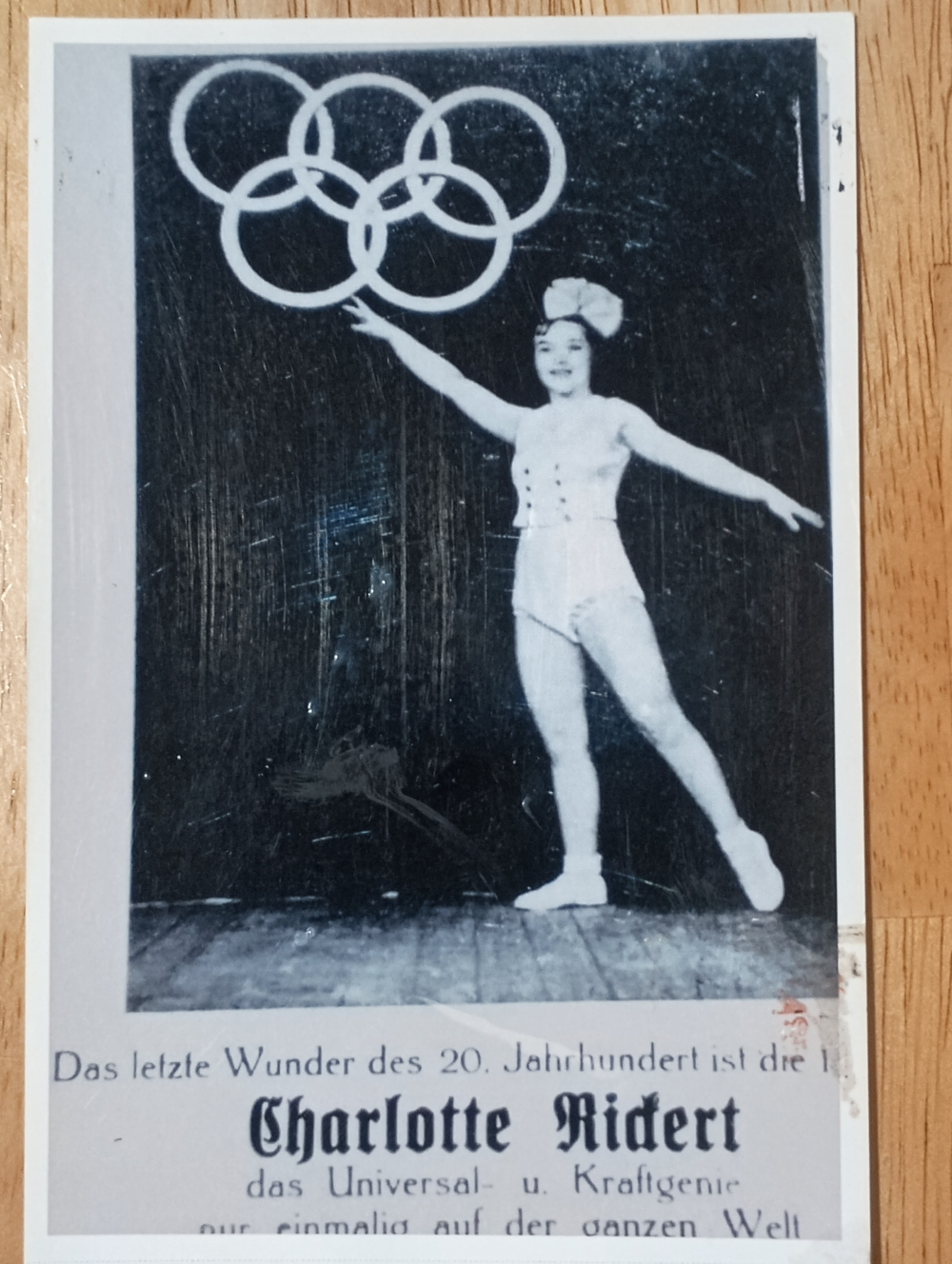
CAIRO — But Charlotte’s appeal was never only about power, it was about personality.
The audience did not simply watch a strong woman, they watched Charlotte.
Europe in that era loved spectacle. Variety theaters, cabarets, circuses, and traveling shows filled the cultural landscape, and performers who could astonish an audience were celebrated like modern celebrities and Charlotte was one of those performers.
In 1935, Charlotte joined a major German variety production known as "Nachwuchs am Varieté" translated roughly as “up-and-coming talent.” The show highlighted the abilities of young performers—dancers, singers, musicians, jugglers, and acrobats and among them was the teenage girl who had become known as the strongest woman in the world.
The production appeared at Berlin’s famous Wintergarten Theater, a legendary venue that had been a centerpiece of Berlin nightlife since the late 19th century. The theater had hosted some of Europe’s most celebrated entertainers, and now Charlotte Rickert stood beneath its lights when she was still only a teenager.
Yet her name was already appearing prominently on the bill.
She was not the stereotypical image of a massive weightlifter or a towering performer. The audience saw a young woman who looked almost delicate—but who possessed a strength that seemed impossible.
In 1936, Berlin became the center of the world’s attention as the Olympic Games were coming to Germany, and the country was determined to showcase itself as a place of athletic excellence and cultural achievement.
Women’s weightlifting was not an official Olympic sport at the time. However, Charlotte was connected with Olympic-era exhibitions celebrating athletic ability, and accounts of her life describe her performing in association with the 1936 Olympic festivities.
According to stories Charlotte later shared, she received a special gold medal recognizing her participation.
Her abilities attracted enormous attention because she was demonstrating strength at a time when women were rarely celebrated for physical power.
By the summer of 1939, Charlotte was performing in Denmark with one of America’s most famous cowboy stars, Tom Mix. For a young performer who had spent her childhood dreaming of new stages and new opportunities, it seemed like another door was opening. There were plans for Charlotte to appear in a film with the American cowboy star.
Hollywood seemed within reach.
But history intervened. The outbreak of World War II changed everything.
And tragedy soon followed.
Tom Mix died in 1940 in a car accident in Arizona, ending those plans. The Hollywood opportunity disappeared, and Charlotte and her family remained trapped in a Europe consumed by war.
The performer who had once traveled freely across borders now lived in a continent where borders were closing and danger was everywhere.
During the war years, the Rickert family continued performing. According to Charlotte’s recollections, they were ordered to entertain German troops, including soldiers near active combat zones and for performers who had spent their lives bringing joy to audiences, the circumstances were increasingly grim.
They were no longer simply traveling entertainers.
They were people trying to survive.
One of the most dramatic stories Charlotte told from this period involved an incident in Ludwigshafen.
Her family was staying in a house when an Allied bomb landed on the roof. According to Charlotte’s account, the bomb did not explode.
Her father, recognizing his daughter’s unusual combination of strength and agility, ordered her to climb onto the roof and remove it. Charlotte did what she had been trained to do her entire life.
She climbed.
She lifted.
She carried.
And, fortunately, the bomb turned out to be a dud.
Whether beneath the lights of a theater or facing danger during wartime, Charlotte’s extraordinary abilities had become more than a performance.
The most harrowing chapter of Charlotte’s wartime story came late