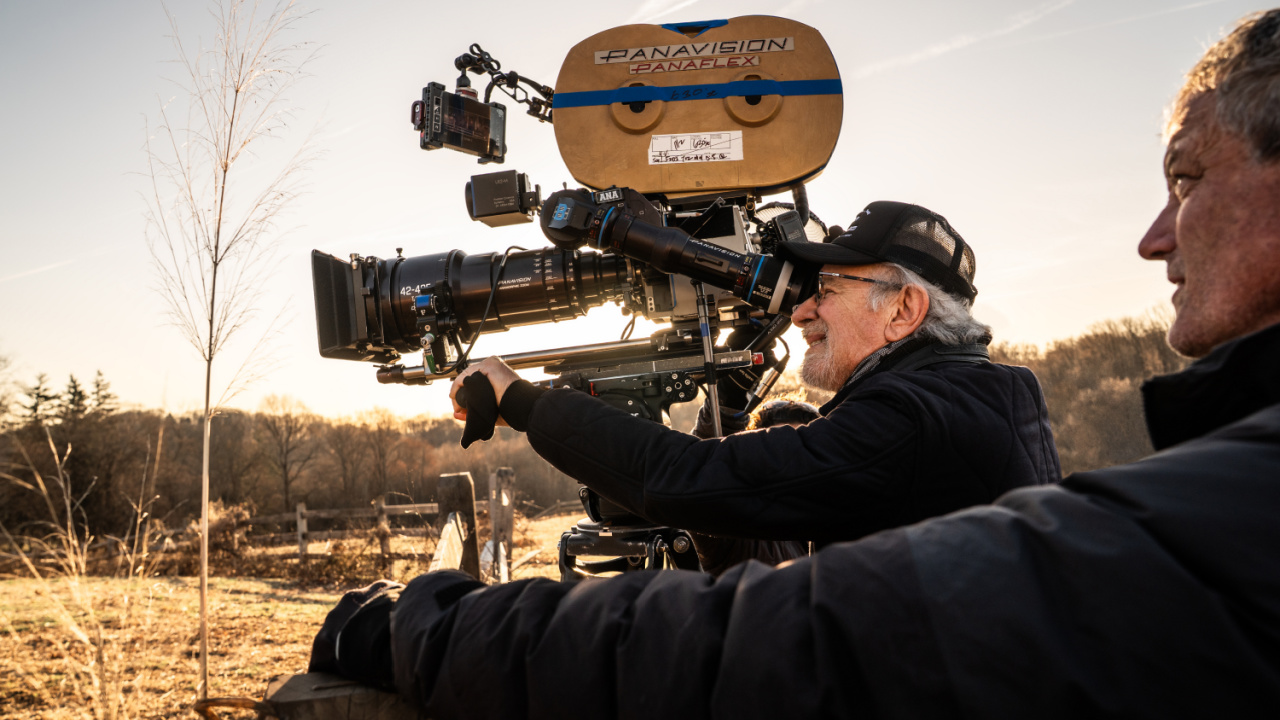
GREENE COUNTY — I went to see Stephen Spielberg's latest film, Disclosure Day, with arms folded and an "Alright, hotshot, impress me!" attitude. My primary reason for going was to report on scenes in the film shot in Greene County (you might spot at least one location if you know the Windham area). As a child of the 1980s, Spielberg's films and worldview are hardwired into my imagination, yet I haven't seen a Spielberg film in theaters for nearly a decade, and that particular movie left me disenchanted. But despite my best efforts, the film had its hooks in me within minutes, and my arms slowly unfolded. I shouldn't have a hard time saying this, but Stephen Spielberg is back with an exciting film.
I am not going to describe the movie's plot to you; there are zillions of reviews out there that do if you want to know more or go see it knowing as little as possible. However, I will set up the film a bit. Disclosure Day takes place over two days amid an ongoing conflict involving North Korea, which is on the precipice of tipping into full-scale disaster. We see this through clips of news broadcasts and conversations (one character mentions the onset of WWIII). It's against that backdrop that we follow a whistleblower played by Josh O'Connor as they evade capture by a powerful organization while on the run with top-secret, earth-shattering files. The film is off and running within minutes and really never lets up. As Spielberg himself has said, he essentially drops us into the third act and continues on from there. The result is one of the most exciting movies he has made in decades.
What stood out to me with Disclosure Day is that the legendary filmmaker wanted to make this film in 2026. There was much ado about Spielberg's return to the alien genre with Disclosure Day, a theme he first explored with 1977's Close Encounters of the Third Kind. If anything, Close Encounters is the Spielberg film that shares the most DNA with Disclosure Day (there's even a blink-and-you-miss-it reference toward the end). The nearly 80-year-old legend has worked across a wide variety of genres, not just sci-fi, in his lengthy career. While he is no stranger to paranoid conspiracy thrillers (Minority Report is a good example), he was, if anything, working diametrically against it when he burst onto the scene with Jaws in 1975. As the U.S. was emerging from the assassination-heavy 1960s, the Vietnam War was in its death lurch, and wounds of Watergate hadn't yet healed, filmmakers explored the nation's complex tone as it looked toward a bicentennial with movies like The Parallax View, Three Days of the Condor, and The Conversation. While these classics (that work quite well in 2026, by the way) represented the predominant cinematic tone of the era, Spielberg changed all of that by giving us the modern "blockbuster" with Jaws, and ushered in a new era of movies. Audiences cheered as Chief Brody killed the bloodthirsty shark from the skeletal remains of a boat that should have been bigger. Crowds were eager to have something, anything, to cheer about, even when the good guys only come close to winning (think The Bad News Bears or Rocky), and that's what Spielberg delivered. What's fascinating about Disclosure Day is that Spielberg has made a paranoid conspiracy thriller akin to the mid-70s movies he wasn't making, but merged it with his indelible Stephen Spielberg fingerprint. It's an adventure film, a chase, an alien movie; it's about childhood, wonder, and empathy. Spielberg has made all of these movies before, just not all at once as he has here.
I'd be remiss if I didn't mention Emily Blunt. Blunt plays an ambitious but frustrated weather presenter on a Kansas City television station. Without giving too much away, she taps into a long-dormant part of herself and, from there, is off and running as an absolute force of nature. Blunt is always great, but she steals every scene in a film loaded with great performances with scene-stealers in their own ri